
Author
Bryan Angstman
Owner, Naturally Green Cleaning
IICRC Certified Carpet Cleaning Technician
15+ years experience cleaning carpets and rugs in Manhattan Beach and the South Bay.
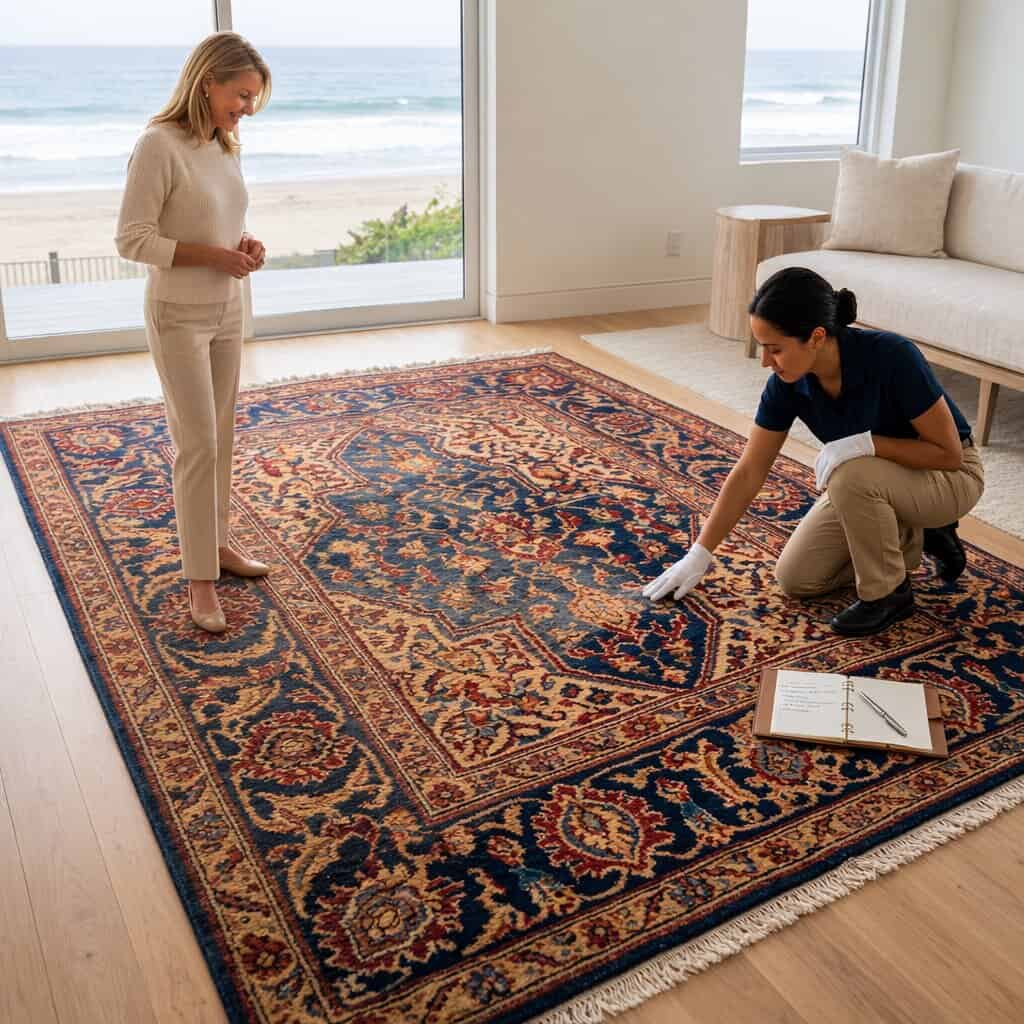
Manhattan Beach carpet cleaning for luxury estates requires a preservation approach rather than traditional steam cleaning because salt air, sand, and coastal humidity degrade natural fibers like wool, silk, and viscose through chemical and mechanical processes unique to the South Bay. According to the Carpet and Rug Institute (CRI), professional deep cleaning on manufacturer-recommended intervals protects carpet performance and preserves warranties. Coastal homes, however, require fiber-specific methods and shorter intervals to counteract damage from sea-salt aerosols and silica abrasion.
Custom flooring in Manhattan Beach's Sand Section and Hill Section represents a major capital investment that standard cleaning services can destroy. Premium flooring materials like wool wall-to-wall installations, hand-knotted Persian rugs, and designer viscose area pieces each respond differently to the coastal environment. Using a "one-size-fits-all" cleaning process risks shrinkage, browning, dye migration, and voided warranties.
The solution is what industry professionals call a "preservation protocol": a fiber-specific, pH-balanced, low-moisture approach that removes embedded salt and sand without triggering the chemical and structural damage that conventional hot water extraction causes in delicate natural fibers. Estate owners who treat their flooring as a capital asset, rather than a disposable surface, can significantly extend the service life of high-quality carpeting through scheduled professional maintenance.

Coastal homes are exposed to microscopic sea-salt aerosols carried inland by ocean winds. These particles settle on surfaces and fabrics and are highly hygroscopic, meaning they attract moisture from humid air. When salt absorbs moisture it forms concentrated brine that can accelerate deterioration of certain materials and finishes over time.
In coastal environments like Manhattan Beach, these environmental factors can embed salt residue and abrasive grit deep within carpet fibers, making standard inland cleaning methods less effective. The combination of salt air exposure, wind-blown sand, and persistent humidity creates a degradation cycle that requires specialized coastal carpet care.
Manhattan Beach’s coastal climate typically produces average humidity levels in the mid-60s to low-70s, with elevated morning humidity common during the seasonal marine layer often referred to locally as “June Gloom” and “May Gray.” These conditions can trigger a chemical process known as deliquescence, in which salt crystals absorb enough moisture from the air to dissolve into a concentrated liquid brine on fiber surfaces.
Sodium chloride (table salt) reaches its deliquescence point at roughly 75% relative humidity. Calcium and magnesium chlorides, both present in sea-salt aerosols, become wet at much lower thresholds. Research published in Advances in Atmospheric Sciences documented that magnesium chloride particles can reach their deliquescence point at relative humidity as low as 33% (Tang & Munkelwitz, AAQR, 2009). In Manhattan Beach, where humidity fluctuates across these thresholds daily, salt constantly dissolves into fiber interiors and re-crystallizes as the air dries.
This salt cycling produces measurable damage to wool carpet fibers. Peer-reviewed research found that calcium ions promote degradation of disulfide bonds, the primary cross-links that give wool its resilience, at a significantly greater rate than sodium ions during hydrothermal treatment (International Wool Textile Organisation).
Beyond chemistry, Manhattan Beach homes face a mechanical threat from wind-driven silica sand, the beach dirt and beach particulates carried by ocean breezes. Sand particles have sharp, jagged edges that act like microscopic sandpaper when trapped at the base of carpet pile. Every footstep grinds fibers against these abrasive grit particles, cutting and fraying them from the bottom up.
Textile conservation guidance from the Canadian Conservation Institute emphasizes that excess water exposure can cause natural fibers to swell, subjecting them to accelerated deterioration from surrounding chemicals and biological agents. In coastal homes, this wear accelerates because sticky salt residue prevents sand from being lifted by standard vacuuming, locking abrasive debris in place against delicate wool or silk yarns.
Salt air damages wool carpets through two simultaneous pathways: chemical degradation from hygroscopic salt crystals that weaken protein fiber bonds, and mechanical abrasion from salt-trapped silica particles that physically cut fibers during foot traffic. Professional carpet cleaners who specialize in coastal carpet care must address both pathways to deliver better results.
Wool is naturally hygroscopic, meaning the fiber can absorb up to 30% of its weight in moisture without feeling wet. In a coastal environment, this turns wool into a reservoir for salt-laden humidity. According to textile conservation guidance from the Woolmark Company and the WoolSafe Organisation, salt accumulation in carpet fibers contributes to stiffness, weakening, and accelerated fiber wear over time. High humidity typical of coastal regions causes carpets to retain moisture, which can compromise indoor air quality by promoting mold, mildew, and allergens.
Salt buildup also creates a visible problem. As moisture evaporates, salt deposits leave behind white, powdery residues on carpets, especially on lighter colors. These residues dull a carpet's appearance and accelerate re-soiling because the hygroscopic salt continues attracting moisture and airborne contaminants (Haines et al., 2019).
The Corrosion Zones of Manhattan Beach:
Not every neighborhood in Manhattan Beach faces identical risks. The type of professional carpet cleaning your house requires depends on which zone it falls within:
| Zone | Geography | Primary Threat | Recommended Focus |
|---|---|---|---|
| Zone 1: The Strand to Highland | Sand Section (oceanfront) | High salt and sand abrasion from direct oceanfront exposure | Salt neutralization (de-salination) and sand extraction every 6 months |
| Zone 2: The Hill Section | Elevated terrain, high sun | Intense California sun / UV exposure accelerates fading | UV fade protection; fiber-safe protectants |
| Zone 3: The Tree Section | Inland neighborhoods | Pollen, tree sap, and organic debris tracked indoors | Agitation-based cleaning for organic soil removal |

Sticky rugs in coastal homes are usually caused by salt residue that forms a briny film on fiber surfaces, combined with leftover detergent from previous cleanings that coastal humidity prevents from fully drying. Both issues require a salt-neutralizing rinse and residue-free extraction by professional technicians familiar with coastal conditions.
Salt crystals deposited from coastal air absorb moisture and form thin brine films on carpet fibers. These films create the sticky sensation homeowners notice and trap additional soil, dust, and organic debris.
A second contributor is cleaning residue from generic cleaning solutions. Shaw Industries warns that detergent residue can become sticky and cause rapid re-soiling if not properly rinsed (Shaw Residential Carpet Warranty Brochure). Coastal humidity slows evaporation, extending the window in which residues remain mobile and tacky. This explains why a rug in Manhattan Beach can feel dirty only weeks after a standard cleaning if salt and cleaning chemical residues were not fully neutralized.
Luxury interiors in Manhattan Beach typically feature wool, silk, and viscose fibers, each carpet type requiring distinct care protocols. Wool carpet cleaning, silk rug cleaning, and viscose rug care all demand different pH ranges, moisture levels, and mechanical approaches. Using the wrong method on the wrong carpet material causes irreversible damage, whether the piece is a high-traffic living room installation or a delicate area rug in a formal sitting room.

The professional consensus among certified carpet cleaning companies is a categorical prohibition on traditional steam cleaning (hot water extraction) for viscose and silk area rugs. This deep cleaning technique involves injecting hot water under high pressure into fibers, which is disastrous for these delicate materials.
Luxury fiber maintenance guides from multiple manufacturers specify that viscose and silk require minimal moisture and fast drying time, warning that excessive moisture or prolonged drying can cause physical and aesthetic problems that may not be correctable (Thai Ping/WoolSafe Maintenance Guidelines).
The specific risks of steam cleaning viscose and silk include:
Cellulosic Browning: Viscose is prone to a phenomenon where plant-based fiber materials turn yellow or brown when they remain wet for even a short period. This browning is often permanent and can be triggered by a simple water spill or high coastal humidity (Ultimate Rug Spa, "Viscose Rug Cleaning").
Fiber Collapse and Matting: The heat and moisture of a carpet cleaning machine cause viscose fibers to lose their orientation and shimmer. The fibers often dry in a "crunchy" or matted state.
Dye Migration: Silk and many high-end viscose rugs use natural or poorly set dyes that will "bleed" or migrate when exposed to high heat and moisture.
Structural Distortion: Because viscose loses up to 70% of its strength when wet, the mechanical agitation of a steam cleaning wand can tear or fray fibers, producing a fuzzy appearance (Oriental Rug Salon, "Viscose Rug Cleaning").
For these reasons, luxury silk and viscose rugs should only be cleaned by specialists using low-moisture or dry-solvent methods in a controlled facility.
Wall-to-wall wool carpeting is a staple in the bedrooms, hallways, and dressing areas of Manhattan Beach estates. The greatest risk during professional cleaning is shrinkage, which can cause the carpet to pull away from walls or tear at the seams. Proper wool carpet cleaning in a coastal environment requires controlling moisture, pH, and drying time simultaneously.
Wool has a well-documented shrinkage mechanism called felting, an irreversible process where fiber scales interlock like a ratchet when subjected to moisture combined with mechanical agitation. A peer-reviewed study confirmed that felting shrinkage during wet processing cannot be reversed (Hassan & Carr, PMC, 2019). The risk increases when carpet has a natural fiber backing like jute, which can shrink with enough force to warp an entire installation.
The "White Glove" protocol for wool wall-to-wall carpet cleaning includes:
Low-Moisture Hot Water Extraction (HWE): A trained professional uses a high-powered truck-mounted unit that regulates water temperature and provides massive suction. The goal is to use the least amount of water possible while still flushing out salt and sand. One luxury manufacturer recommends "one pass with spray and two dry passes" to minimize retained moisture.
pH-Neutral WoolSafe Agents: Avoiding alkaline cleaners is critical. High pH (above 8.5) can cause yellowing of the wool and destabilize dyes. Professional technicians use WoolSafe-approved cleaning solutions that maintain the fiber's natural acidic balance (pH 4.5–5.5).
Rapid Evaporation and Dehumidification: The cleaning process is not finished until the carpet is dry. In Manhattan Beach, the air is often too humid for carpets to dry naturally. Professionals use centrifugal air movers and industrial-grade dehumidifiers to ensure dryness within 4 to 6 hours.
Multiple Dry Passes: The technician should perform at least two "dry" extraction passes for every one "wet" cleaning pass to remove as much moisture as possible from the backing and pad.
| Feature | Wool | Silk | Viscose (Rayon) |
|---|---|---|---|
| Fiber Type | Natural Protein | Natural Protein | Regenerated Cellulose |
| Wet Strength | High | Medium (loses 15–20%) | Extremely Low (loses up to 70%) |
| Safe pH Range | 4.5–8.0 (neutral preferred) | 4.5–5.5 (acidic) | 4.5–5.5 (acidic) |
| Steam Cleaning Safe? | Yes, with professional control | Not default; specialist only | Not recommended |
| Primary Coastal Risk | Salt accumulation, felting shrinkage | UV degradation, dye migration | Structural collapse, browning |
| Recommended Method | Low-moisture hot water extraction | Minimal moisture, in-plant specialist | Low-moisture, controlled pH, specialist facility |
A preservation-focused approach combines low-moisture cleaning, pH-balanced products, and climate control to prevent salt and sand from damaging high-end carpets. The "White Glove" protocol shifts estate maintenance from reactive cleaning to proactive preservation, pairing fiber-specific professional cleaning with environmental controls that reduce salt and sand ingress between service visits.
Professional carpet cleaning does not void warranties when it follows manufacturer-approved methods. In fact, most companies that manufacture high-end carpeting require periodic professional cleaning to keep warranties valid. For owners of premium flooring materials such as Fabrica, Mohawk, or Stark, warranty compliance is a key reason to rely on certified professional carpet cleaners.
Mohawk Industries requires at least one professional cleaning every 18 months using products and equipment certified through the CRI Seal of Approval program, along with proof of service. Shaw Industries similarly warns that non-approved cleaning products and topical treatments may result in damage not covered by warranty.
A typical warranty for a luxury wool or nylon installation requires:
What does void warranties: using non-approved chemicals, employing prohibited methods (such as aggressive bonnet cleaning on luxury fibers), and failing to document professional service. Companies certified by the IICRC (Institute of Inspection, Cleaning and Restoration Certification) provide trained, industry-standard service that satisfies most manufacturer requirements.
Organic carpet cleaning can be safe for Persian rugs if the cleaning chemistry is pH-balanced and residue-free. The critical factor is pH control, not marketing labels. A plant-based ("organic") cleaner can still be alkaline or leave sticky residues that accelerate re-soiling.
The WoolSafe Organisation certifies products independently tested for both cleaning effectiveness and fiber safety, including environmentally responsible formulations that carry the WoolSafe EnviroSeal mark. For high-value Persian rugs (typically wool pile on cotton foundations, sometimes with silk highlights), the safest pathway is in-plant cleaning under controlled humidity by a provider who documents fiber and dye testing, controls pH and moisture, and accepts conservation-grade limits.
Common DIY "natural" remedies carry hidden risks. The WoolSafe Organisation advises against using household products not specifically formulated for wool, as alkaline substances can destabilize natural dyes and damage fiber structure. Baby safe chemicals and eco-friendly cleaning products are preferable, but only when they carry independent certification from WoolSafe or the CRI Seal of Approval.
The "Privacy" Promise: Concierge-level cleaning services for Manhattan Beach estates also address the unique lifestyle requirements of high-net-worth homeowners. Professional technicians understand the need for discretion, flexible scheduling around family and social calendars, and careful handling of fine furniture and art during the cleaning process. Many companies in Manhattan Beach offer free, on-site estimates so homeowners can evaluate the service before committing.
| Feature | Standard Service | Estate Preservation Protocol |
|---|---|---|
| pH Balance | Often high-alkaline (above pH 8.5) | pH neutral to mildly acidic (fiber-matched) |
| Water Management | High-volume, slow drying | Low-moisture extraction with controlled rinse |
| Drying Time | 12–24+ hours in humid conditions | 2–4 hours with forced air and dehumidification |
| Product Certification | Generic or unverified solutions | CRI Seal of Approval and/or WoolSafe-approved |
| Warranty Compliance | May not meet manufacturer requirements | Documented, compliant, receipt-archived |
| Salt Neutralization | Typically not addressed | Targeted extraction and rinse protocol |
| Fiber Identification | Rarely performed | Pre-cleaning fiber and dye testing |

A concierge-level carpet service offers scheduled maintenance, discreet technicians, and bundled care for carpets, upholstery, and other surfaces, helping estate owners protect their flooring investment without managing multiple vendors. In Manhattan Beach, where custom floor installations represent significant capital, this approach treats cleaning as part of a property's ongoing asset management.
For coastal estates, the CRI recommends professional deep cleaning every 12 to 18 months for residential carpets, with more frequent service for homes subject to heavy soiling (CRI, "Cleaning and Maintenance"). Coastal conditions justify the more frequent end of this range. Households with pets, children, or allergy sufferers may need service every three to six months.
| Area / Usage | Recommended Cleaning Frequency | Objective |
|---|---|---|
| Beachfront Entryways and Hallways | Every 6 months | Remove abrasive silica and salt before embedding |
| High-Traffic Living Room / Dining Areas | Every 6–12 months | Address traffic lanes, pet odors, and atmospheric soiling |
| Master Suites / Low-Traffic Rooms | Every 12–18 months | Follow manufacturer-recommended intervals |
| High-Value Silk/Viscose Rugs | Every 12–18 months (specialist only) | Prevent browning and fiber matting |
Waiting until a carpet "looks dirty" is a common mistake in coastal environments. By the time discoloration appears, salt and sand have typically caused structural weakening of carpet fibers. Visible stains, lingering odors, or increased allergy symptoms are reliable signs that it's time for professional service. A scheduled concierge approach extracts contaminants while they remain on the surface of the pile, before they bond to fibers through repeated humidity cycles.
Beyond carpet care, a comprehensive concierge service for Manhattan Beach estates may also encompass upholstery cleaning, tile and grout cleaning, leather sofa cleaning, and wood floor maintenance. Some providers in the greater Los Angeles area, including the South Bay and Redondo Beach, also offer add-on services like pressure washing, gutter cleaning, and power washing for exterior surfaces exposed to salt air. Whole-home service packages often reduce the cost per room while ensuring consistent maintenance across the property.
Carpet cleaning cost in Manhattan Beach typically ranges from about $40 to $120 per room depending on carpet type, room size, and cleaning method, or roughly $0.20 to $0.90 per square foot. Most companies have a minimum job fee of $100 to $150, especially for small jobs. Add-on services like deep stain removal can increase the total by $40 to $300, and cleaning carpeted stairs costs an average of $2 to $5 per step. Moving furniture may incur an extra charge, so transparent pricing should include confirmation of any additional costs before work begins. Many carpet cleaning companies offer discounts for recurring services, which can lower the overall cost for estate owners on a scheduled maintenance plan. Homeowners should request free, on-site estimates to get an accurate quote based on the specific space, access requirements, and carpet material.
The optimal method depends on the carpet type and fiber. For synthetic and wool wall-to-wall carpet, controlled hot water extraction (the most popular and effective steam cleaning service for deep cleaning) using CRI-certified equipment and WoolSafe-approved chemistry is the method most commonly recommended by luxury carpet manufacturers. For silk and viscose rugs, low-moisture methods with acidic pH control and rapid drying represent the consensus best practice.
Other methods serve specific purposes. Encapsulation carpet cleaning involves applying a wet foam detergent that crystallizes around dirt particles, which are then vacuumed away. This method is ideal for commercial spaces or interim maintenance between deep cleans. Bonnet cleaning addresses only the top third of the pile and is best for low-traffic areas with surface dirt. The shampooing process works cleansing foam into fibers with rotating brushes, then vacuums the residue. Dry cleaning methods use minimal moisture for fast turnaround.
For all fiber types in coastal environments, the cleaning process should include a specific salt-neutralization step and a residue-free rinse to prevent the "sticky resoiling" cycle that coastal humidity amplifies.
Avoid alkaline household detergents (pH above 8.5), bleach-based products, enzyme cleaners not rated for natural fibers, and silicone-based protectors that can attract soil and yellow over time in coastal UV environments. Vinegar, while acidic, can damage silk fibers and destabilize certain natural dyes. The WoolSafe Organisation advises against using any household product not specifically formulated and tested for use on wool or natural fibers. The safest approach is to choose products carrying the WoolSafe Approved mark or the CRI Seal of Approval, both of which indicate independent laboratory testing for cleaning effectiveness and fiber safety.
For reliable carpet cleaning in the Manhattan Beach and South Bay area, look for IICRC-certified, CRI Seal-of-Approval providers with strong local reviews and documented experience handling luxury fibers in coastal environments. Established businesses with decades of experience often have specialized knowledge of the unique challenges of oceanfront exposure.
When evaluating any carpet cleaning service, homeowners should confirm IICRC certification, ask about cleaning solutions and equipment certifications, verify the company carries insurance, and request customer reviews or references. For estate-level service, ask whether the provider offers fiber and dye pre-testing, documents cleaning methods for warranty compliance, and uses WoolSafe-approved or CRI-certified products. Online scheduling and transparent pricing are additional signs of reliable customer service and excellent service standards.
Vacuuming thoroughly before professional carpet cleaning removes loose surface debris, dirt, and sand. This allows the deep cleaning technique to focus on embedded salt, stains, and allergens rather than surface-level particles. This preparation step is especially important in Manhattan Beach homes where sand and grit accumulate rapidly. For delicate area rugs made of silk, viscose, or looped wool (like Wiltons or Berbers), use a suction-only vacuum with the beater bar disabled to avoid pulling loops or fraying fibers.
Beyond a regular maintenance schedule, several indicators suggest it's time for professional service: visible stains that resist spot treatment, lingering pet odors or musty smells (which may indicate salt-trapped moisture and biological growth), increased allergy symptoms among family members, a dull or matted appearance in traffic lanes, and a sticky or tacky feel, especially noticeable in the mornings in coastal homes. For customers who rely on their carpets as a design feature in spring cleaning or pre-sale staging, scheduling professional deep cleaning well in advance ensures the best results.
Bryan Angstman – Carpet & Textile Cleaning Specialist
Bryan Angstman is the owner of Naturally Green Cleaning, a Manhattan Beach–based company specializing in carpet, rug, and upholstery cleaning throughout the South Bay and greater Los Angeles area. With an MBA from Concordia University and more than a decade of hands-on experience in the carpet cleaning industry, Bryan focuses on developing cleaning methods that protect delicate fibers while improving indoor environmental quality.
Bryan holds professional certifications through the Institute of Inspection Cleaning and Restoration Certification (IICRC) and works with industry standards developed by organizations such as the Carpet and Rug Institute (CRI) and WoolSafe Organisation. His work emphasizes fiber-safe cleaning methods, low-residue solutions, and fast-drying processes designed to extend the lifespan of luxury carpets and rugs.
He founded Naturally Green Cleaning in 2009 with the goal of providing safer carpet cleaning solutions that are effective for sensitive households, children, and pets while preserving high-end flooring materials commonly found in coastal homes.
Bryan's company has received multiple industry recognitions including the Angie's List Super Service Award and recognition as Best Carpet Cleaner in the South Bay by the Daily Breeze.
When he is not working with clients or testing new cleaning methods, Bryan enjoys hiking, camping, and spending time outdoors along the California coast.

"I'm proud that we do that with each cleaning." -Bryan Angstman, Owner
© 2023 Naturally Green Cleaning | All Rights Reserved | Cookies | Privacy Policy | Terms & Conditions
Search Engine Optimization & Website Design by BroBex Marketing